Coursepad is a desktop app for coursework — a calendar, a to-do list, a document library that opens almost any file, AI-generated quizzes and flashcards, and a terminal. Nothing syncs to a cloud. Nothing is uploaded. It's a folder on your computer with a good dashboard on top.
Free 7-day trial · $3.99/mo or $19.99 once · unsigned build — how to open it
Add an exam once and it shows up on the dashboard, the calendar, and the week strip. Drop a PDF in and it opens in the app.
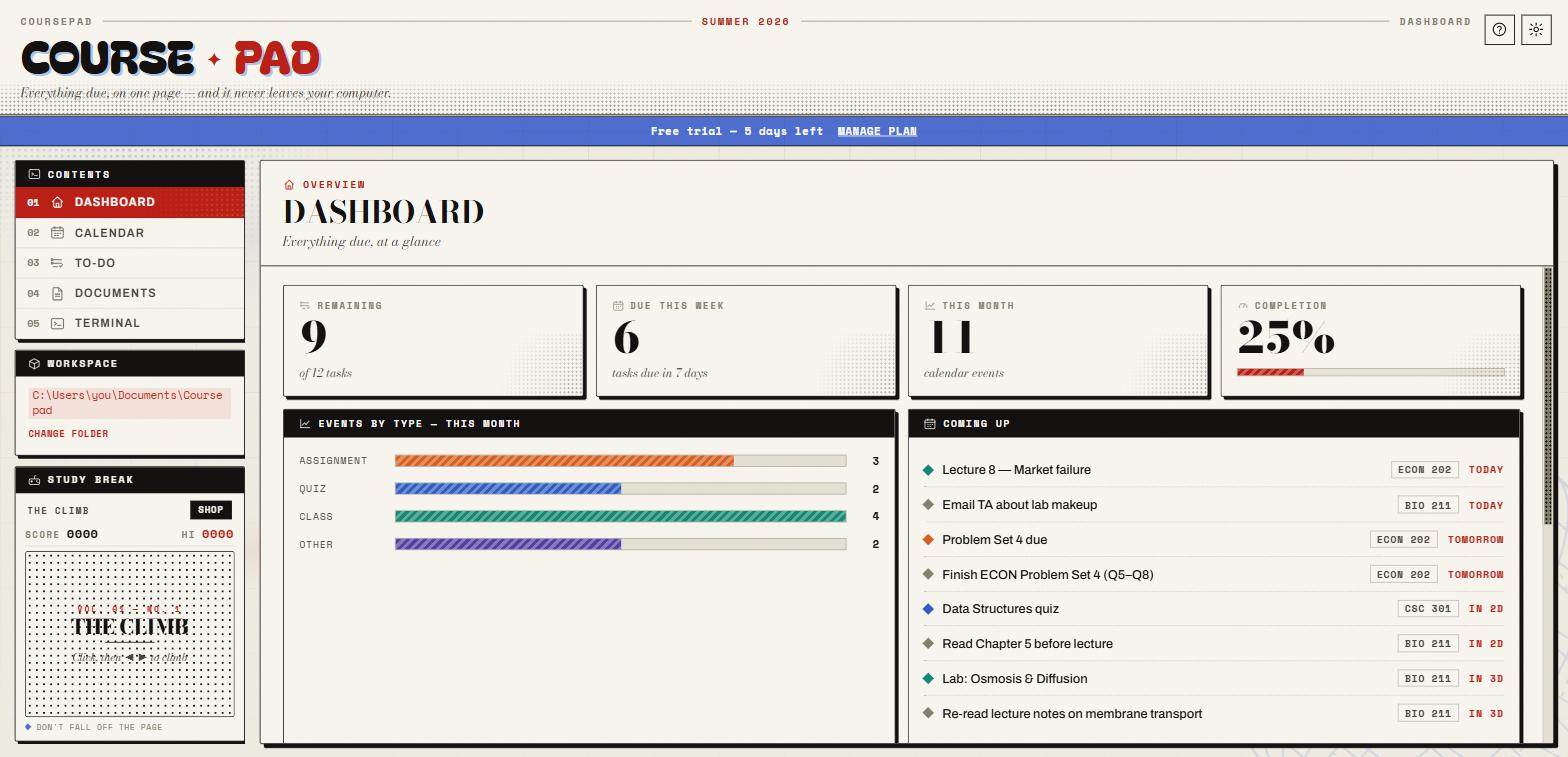
Open Coursepad and see what's actually due — tasks remaining, deadlines this week, a rolling agenda, and a breakdown of your workload by course and by type.
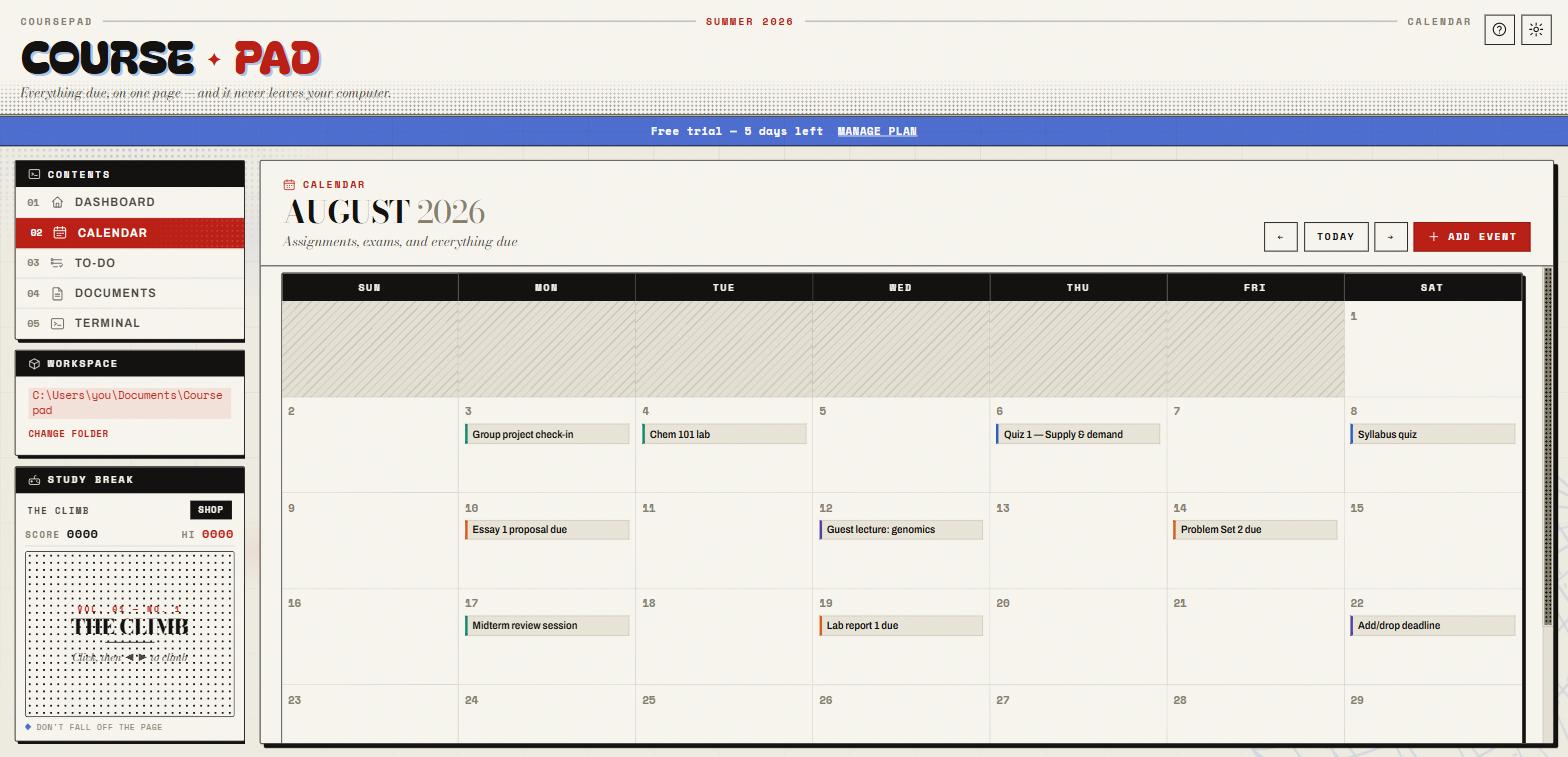
A month calendar for exams, quizzes, assignments and classes — colour-coded by type, tagged by course. The to-do list sorts itself into Overdue, Today, Tomorrow and This Week the moment you add a due date.
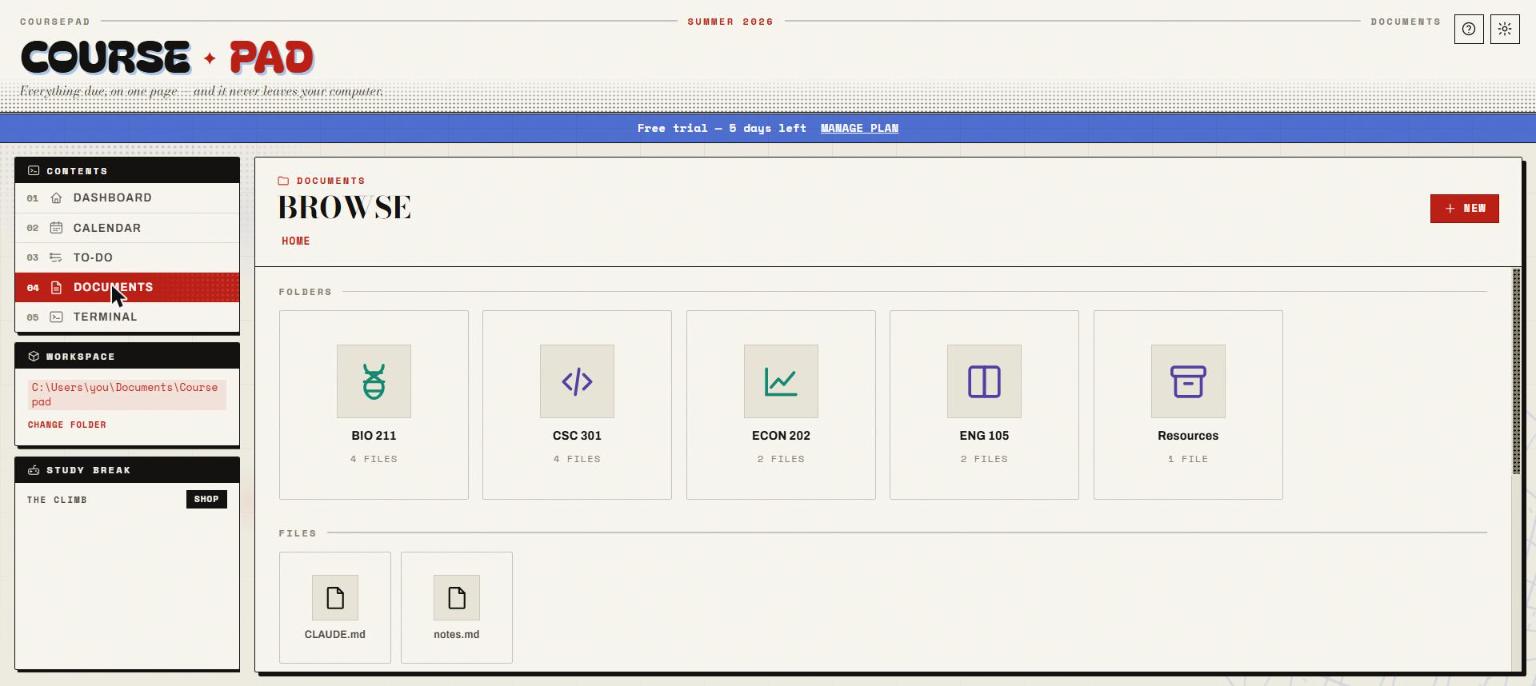
The Documents tab is a real view of your folder. Click a file and it opens right in the app — no other programs, no "download to view".
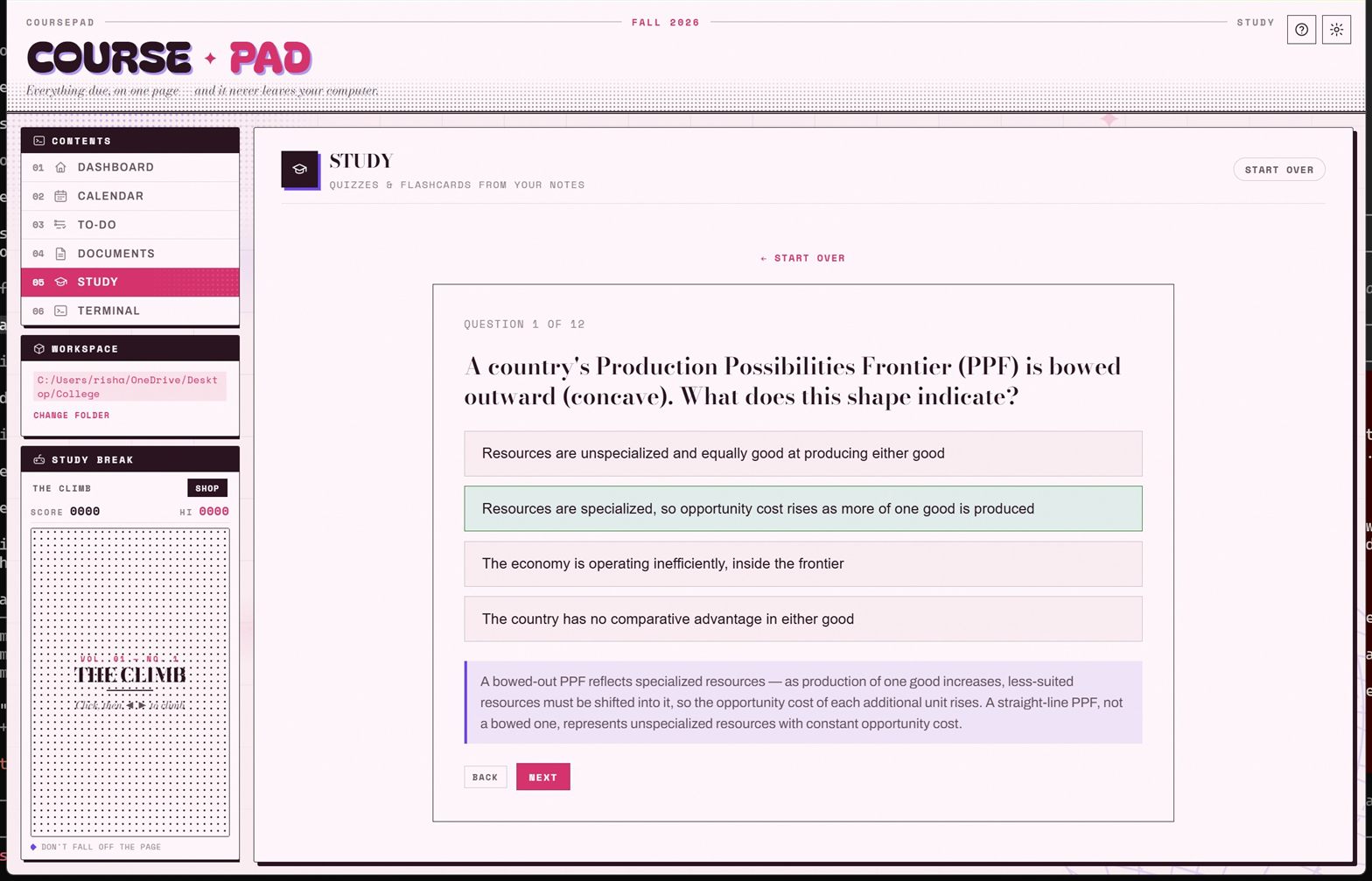
Pick a class, pick the files, and Claude builds a quiz or a flashcard deck from whatever's actually in your folder — lecture notes, slides, old assignments, anything. Take it right in the app: check each answer one at a time and get an explanation on the spot, or flip through cards until you've got them down.
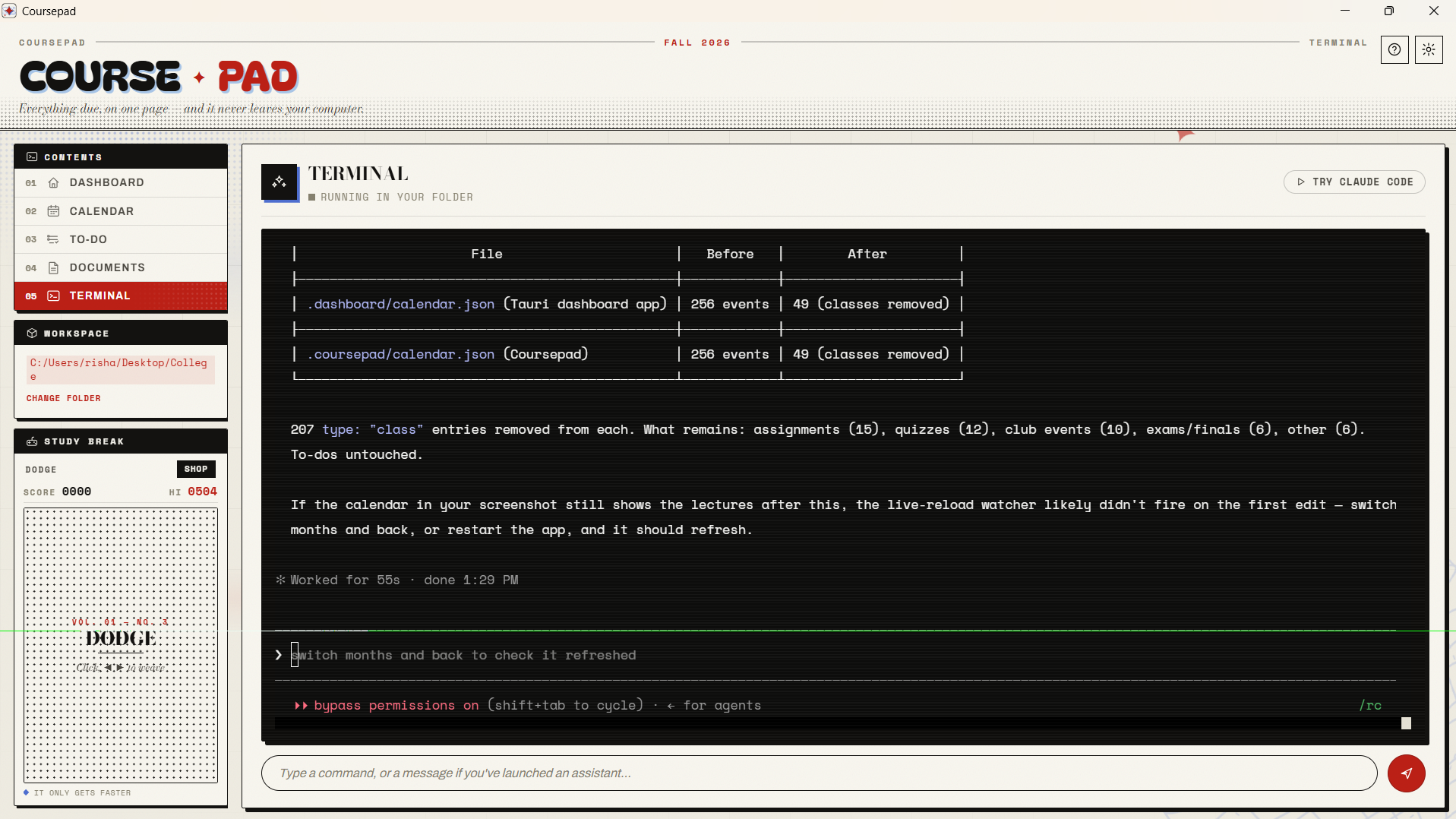
Coursepad doesn't bundle AI. The Terminal tab is a normal command line that always opens in your folder. But if you have your own Claude Code plan, type claude and it can read and change your actual coursework.
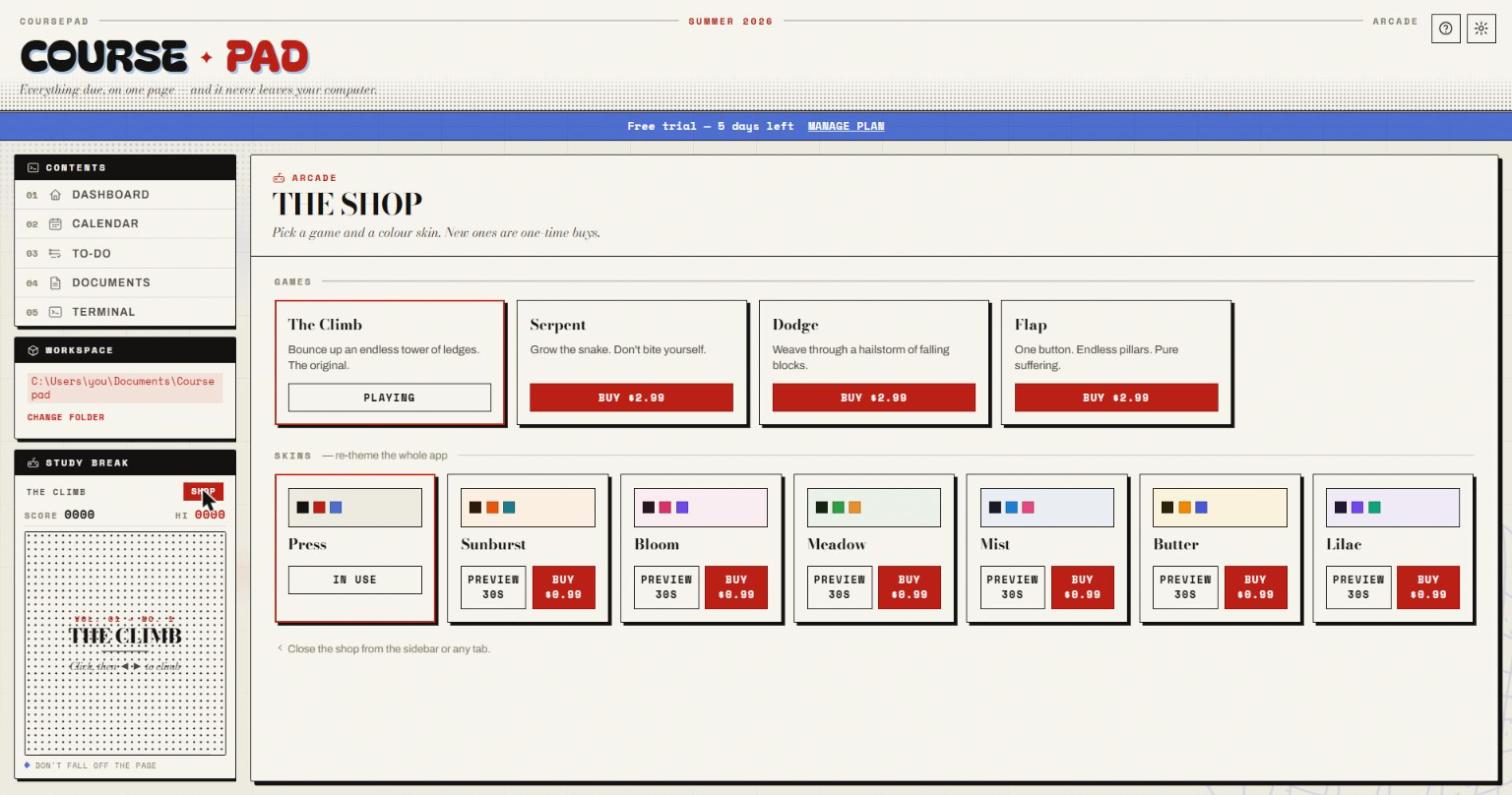
A little arcade lives in the sidebar for when you're stuck — The Climb is free, three more games are a one-time $2.99 each. Twelve skins re-theme the entire app, sold in four bundles of three ($2.99 each) — including a full dark-mode set. Preview any skin for 30 seconds before you buy.
Same app either way. Cancel any time — your files are never touched.
Secure checkout via Stripe · sign in with a one-tap email link, no password
Free for 7 days. One 4 MB download, no installer bloat — WebView2 comes bundled.
Because the installer is new and unsigned, Chrome's Safe Browsing check sometimes flags it before the download even finishes — you'll see "Coursepad_…_x64-setup.exe was blocked because it could be dangerous" at the bottom of the window instead of a normal download bar.
That's Chrome's own reputation check, separate from (and earlier than) the Windows warning below. It hasn't scanned the file and found anything — it's just cautious about installers few people have downloaded yet. To get past it:
Firefox and Edge don't do this extra step — only Chrome's download-time check does.
Coursepad isn't code-signed yet. A signing certificate is a paid, recurring cost, and as a solo developer I haven't bought one for launch. So the first time you run the installer, Microsoft Defender SmartScreen shows a blue box: "Windows protected your PC", listing the publisher as "Unknown publisher".
It's the same file you're downloading from this page, it runs entirely on your computer, and it makes no network calls except to check your subscription. To install:
Once enough people install it, Windows learns to trust it and stops asking. A signed build is on the roadmap.
Distributing a Mac app without a warning requires an Apple Developer Program membership ($99/year) so the app can be "notarized". That isn't set up yet either, so macOS Gatekeeper will block the installer as being from an "unidentified developer" the first time you open it. Here's how to open it:
That's the only prompt you'll see — the installer also clears the flag that would otherwise make macOS block the app again on every future update. Full walkthrough with every screen: Mac install instructions →
Only for billing. You sign in with a one-tap link sent to your email — no password. Your coursework, files and schedule never touch that account; they stay in a folder on your computer.
No. The app has no analytics and no telemetry. The only network calls it makes are to check your subscription status. Your documents and notes stay local.
It's a real command line that always opens in your Coursepad folder — handy on its own. Its main purpose is Claude Code: if you have a plan, you type claude and it can turn transcripts into notes, fill your calendar from a syllabus, track assignments, and more.
Pick a class and the files you want to use, and Claude reads them and builds a multiple-choice quiz or a flashcard deck. Quizzes are checked one question at a time with an explanation for the right answer; flashcards flip front-to-back and support shuffle. It uses your own Claude Code login, same as the Terminal.
Yes, separately — Claude Code is Anthropic's product and they bill it. Coursepad does not include it or resell it. It's required for the Terminal's claude command and for the Study tab's quiz/flashcard generation; every other feature works without it.
Windows 10 & 11, and macOS (Apple Silicon & Intel, one universal .pkg installer). See the Download section for both.
No — that's Chrome's Safe Browsing reputation check, and it fires because the installer is new and unsigned, not because it found anything. Click the arrow next to the blocked download and choose Keep / Keep dangerous file. Full steps are in the Download section.
Because Coursepad isn't code-signed yet — that's a paid certificate a solo developer skips at launch. It's the same file you download here, it runs only on your machine, and it makes no network calls except the subscription check. Windows: click More info → Run anyway. macOS: System Settings → Privacy & Security → Open Anyway — after that one prompt, updates won't ask again. Full steps: Mac install instructions.
All sales are final. The 7-day free trial on the monthly plan is there so you can try Coursepad before you pay a cent. We'll still fix a genuine billing error or a broken install — email us. Details in the Refund Policy.
Through the Stripe billing portal — full steps and the link are in our FAQ.
Free for 7 days. Then it's yours for $19.99, once.
↓ Download CoursepadUnsigned build — why, and how to open it